
Triple Crown Winner
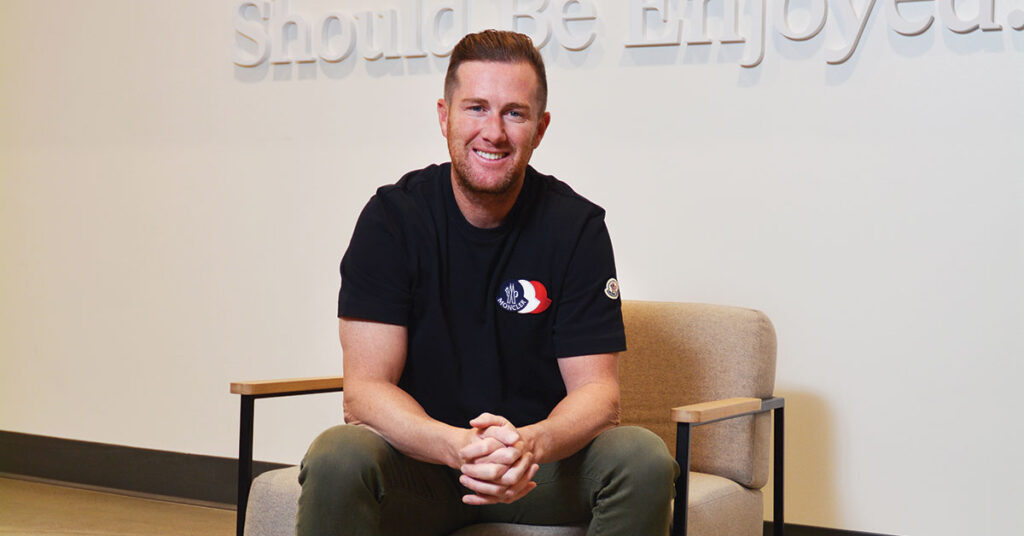
Vess Pearson has driven by the Vivint HQ every day on his way to his own office in the Riverwoods of Provo. “I’ve always looked up to Vivint,” he says. “On that drive, I would think, ‘Wow … that is a big building. I can’t believe they’re a big enough business to have it.’” As a symbol of the growth Vess and his company, Aptive, have seen in their first 10 years of business, the pest control company is moving to that big Vivint building in a few months, meaning dozens of young entrepreneurs can be inspired as they drive by the “Aptive Building” — with Vess leading from the top. It’s the latest in list of achievements and milestones the company has seen — including being named a Triple Crown Winner at this year’s UV50.
David Royce and I built two companies before starting Aptive together 10 years ago. Each of those we sold and then put the money back into the next venture so we could build it better and faster. With Aptive, we knew early on that this was going to be different. We had built the previous businesses to sell a customer base. With Aptive, we knew we were building to become a national consumer services brand.
We were always good at sales, but we had to build all the other muscles associated with long-term business success. We took a more holistic view of business. Entrepreneurship is first and foremost about a willingness to problem solve. We didn’t have the resources to go and chase the leadership that now works here. We had to be gritty. You had to be “on.”
Eventually, we got some momentum and were able to add people to the team who could take us to $100 million, then to $300 million, and then to where we are now — $500 million. The next stop is $1 billion. Without the right people at both times — people at the beginning who were gritty and determined — and now, people who have been around the block and have specialized experience, we could never be where we are now.
Our employees own 30 percent of this business, so we wanted to figure out how to get liquidity into their hands. About a year ago, we transacted with Citation Capital and put nine digits of value into the hands of employees. These people wanted to build homes and make investments. We extracted some of the value of their ownership out of that and let them use the money in their lives.
I have weekly meetings with my direct reports and I’m genuinely in awe. I wonder how I drew in the quality of human beings I get to work with each day. There’s no ambition for me to own everything. I’m comfortable in many things, but I don’t understand the law the way our chief legal officer does; I don’t have the same thinking patterns as our chief strategy officer; I don’t understand finance and forecasting with the depth that our CFO does. I’m not intimidated with bringing people into the room who are smarter than me. Now, my experience has allowed me to learn something about all of those fields, and my experience has allowed me to take those things and put them together into a coherent vision and plan.
We don’t believe we’ve arrived. Pest control is a sleepy industry. As such, it is ripe for innovation and disruption. We’re trying to do that through data and understanding our customers better. We have a heart for customer service.
The first seven years of Aptive were about building scale. We’re in 36 states and 4,000 cities, with more than 600,000 customers. The next five years are about refining and elevating that scale. It’s about dotting the i’s and crossing the t’s and becoming a more elegant customer experience and employee experience provider. Achieving scale means you have resources you can invest. For example, it’s scary to invest in market research because it’s not a direct revenue-producing activity. Because we have scale, we can invest in finding out what our consumer really wants and what the details are that matter. We can go into the market and find out for sure, so we’re not guessing. And we can build the systems customers are looking for.
Your employees are your first customer. The more you can serve them, the better they are going to serve your customers. Figuring out how to meaningfully change customer churn and employee retention is fun stuff. You do it by focusing on it. You think about it. You talk about it — a lot — and you do it from an authentic and meaningful place.
As I think of the early days, I wonder if I would have dreamt bigger in the beginning about where we would be today. Running a privately owned business is not charity, but it is a form of service because you are providing opportunity. Growth means more opportunity for people to advance their careers and reach their goals. I would say to my younger self, dream bigger. If someone else has done it, you can, too.
“All these good things happen when you give, so why wouldn’t you want to spread that out to your family, friends and employees?”